AMF Panel for DG Sets: How Automatic Changeover Reduces Downtime
Power cuts may last only a few seconds, but those seconds can stop machines, interrupt pumps, reset control systems, and delay production. Industries using diesel generator backup therefore need more than a DG set alone. They need an automatic system that can detect mains failure, start the generator, transfer the load, and return the supply to mains when normal power comes back.
An AMF panel, or Automatic Mains Failure panel, manages this sequence automatically. For factories, hospitals, commercial buildings, warehouses, water systems, and process plants, choosing the right AMF Panel Manufacturer can make backup power more reliable and easier to manage.
Why Automatic Changeover Matters
Many modern facilities run continuously. A sudden power failure can stop motors, HVAC systems, servers, and PLC-controlled machines. If someone must start the generator and change the power source manually, valuable time is lost.
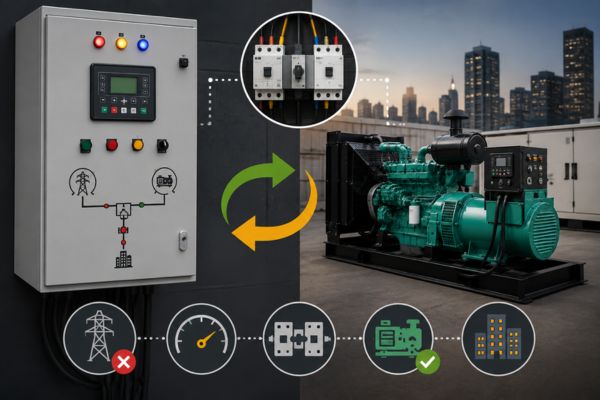
An AMF panel continuously checks the incoming mains supply. When the mains fails or becomes unhealthy, the panel sends a start command to the DG set. Once the generator reaches a stable operating condition, the load is transferred to generator power.
When mains power returns and remains stable for the programmed time, the load moves back to mains. The generator then completes a cooling cycle before stopping. This automatic sequence reduces manual dependence and supports faster power recovery.
How an AMF Panel Works with a DG Set
A typical AMF sequence includes:
- Monitoring mains voltage, frequency, and phase condition
- Detecting mains failure or an unhealthy supply
- Applying a programmed delay
- Sending a start command to the DG set
- Checking generator voltage and frequency
- Transferring the load to generator power
- Detecting healthy mains restoration
- Returning the load to mains after a safe delay
- Running the DG set for cooling before shutdown
The exact logic depends on generator capacity, connected load, breaker arrangement, and site requirements.
Where AMF Panels Help Reduce Downtime
Automatic backup power is valuable where even a short interruption can affect operations.
Manufacturing plants can lose production time when machines stop mid-cycle. Hospitals need dependable power for essential systems. Data centres need backup for critical IT loads. Cold storage and water treatment facilities also depend on continuous electricity.
In Ahmedabad, Gujarat, and other industrial areas across India, more facilities now use PLCs, VFDs, automation systems, digital monitoring, and connected machinery. As plants become more automated, reliable backup control becomes increasingly important.
A properly selected AMF panel helps create a smoother connection between the normal electricity supply and the DG backup system.
Features to Discuss with an AMF Panel Manufacturer
Before selecting a panel, buyers should focus on actual operating needs instead of only comparing price.
Important points include:
- DG set capacity and number of generators
- Total connected and essential load
- ATS, contactor, MCCB, or ACB based changeover
- Mains failure and restoration delay settings
- Voltage, frequency, and phase monitoring
- Generator start attempts
- Manual, auto, and test modes
- Battery charger requirement
- Alarm and event indications
- BMS or SCADA communication
- Suitable enclosure protection
- Space for future expansion
A reliable AMF Panel Manufacturer should study the single-line diagram, generator interface, load details, and site conditions before finalizing the panel.
AMF Panel vs ATS Panel
An ATS, or Automatic Transfer Switch, mainly transfers electrical load between two available power sources.
An AMF panel normally performs a wider control function. It can monitor the mains supply, command the generator to start, check generator readiness, manage transfer timing, give alarms, and stop the generator after mains recovery.
In some systems, the ATS is part of the complete AMF arrangement. Other projects use motorized breakers or contactors. The right choice depends on rating, protection, fault level, and operating sequence.
Understanding this difference is important when planning a new DG backup system or upgrading an old manual changeover setup.
What Makes a Good AMF Panel Design?
Fast transfer is important, but correct timing and protection also matter. Starting a generator for every short voltage dip can create unnecessary wear. A suitable mains-failure delay can prevent unwanted starts.
Warm-up time helps the generator stabilize before taking load, while a cooling period supports controlled shutdown after normal mains power returns.
Proper interlocking helps prevent unsafe connection of mains and generator sources. Clear alarms also help maintenance teams identify failed starts, battery problems, or abnormal voltage quickly.
For projects in Ahmedabad, Gujarat, and across India, buyers should look for customized engineering, suitable components, organized wiring, proper testing, documentation, and technical support.
Why Custom AMF Panels Are Better for Industrial Applications
Every industrial site has different power requirements. Generator capacity, number of feeders, essential loads, motor loads, automation systems, breaker ratings, and operating conditions may vary from one plant to another.
A customized AMF panel can be developed according to these actual conditions.
For example, a small commercial facility may require a simple mains-to-DG changeover system. A large manufacturing unit may require advanced protection, communication with PLC or SCADA, multiple alarms, motorized ACB operation, load priority, and remote monitoring.
This is why working with an experienced AMF Panel Manufacturer is important when reliable backup power is a major part of plant operation.
Conclusion
A DG set provides backup electricity, but the AMF panel controls how quickly and safely that backup becomes available. Automatic monitoring, generator start control, and planned changeover can reduce avoidable downtime and improve power continuity.
Working with an experienced AMF Panel Manufacturer helps ensure the system is designed around actual load conditions, generator controls, safety needs, and future requirements.
For industrial plants, hospitals, data centres, commercial facilities, warehouses, and infrastructure projects, a properly designed AMF system can provide faster response during mains failure and make generator backup easier to operate.
FAQs
An AMF panel detects mains failure, automatically starts the DG set, transfers the electrical load to generator power, and returns the load to mains after normal power is restored.
Yes. AMF panels can be designed for different generator capacities. Breakers, wiring, controller settings, busbars, and protection devices should match the actual application.
An ATS mainly transfers power between two sources. An AMF panel can additionally manage generator starting, stopping, mains monitoring, delays, alarms, and protection functions.
AMF panels are commonly used in factories, hospitals, data centres, commercial buildings, warehouses, pharmaceutical plants, water treatment facilities, and cold storage units.
Time delays help avoid unnecessary DG starts during short power disturbances. They also support generator warm-up, safe load transfer, mains stabilization, and cooling before shutdown.
Check design capability, component quality, protection features, panel testing, customization options, DG integration experience, documentation, and after-sales technical support.