PCC Panel Exporter for Reliable Industrial Power Distribution
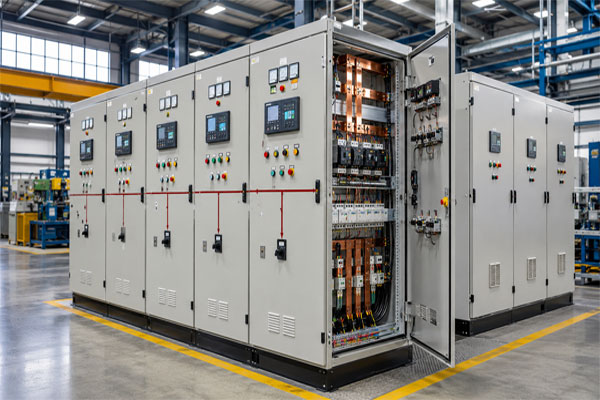
Industrial facilities require a dependable electrical system to distribute power safely across machines, production lines and utility equipment. A Power Control Center panel plays an important role in receiving incoming electrical power and distributing it to multiple outgoing feeders with suitable protection, monitoring and control arrangements.
Usha Electricals is a PCC Panel Exporter offering engineered electrical panels for industrial, commercial and infrastructure applications. The company manufactures PCC panels, including IEC 61439-based configurations, at its facility in Vatva, Ahmedabad. Its panel solutions are developed according to project load, feeder requirements, installation conditions and applicable electrical standards.
What Is a PCC Panel?
PCC stands for Power Control Center. It is a low-voltage electrical panel used to receive power from a transformer, generator or main electrical supply and distribute it safely to different machines, departments, utility systems and sub-panels.
A PCC panel works as the main power distribution centre of an industrial or commercial facility. Electrical power enters through the main incomer, passes through the internal busbar system and is then distributed through multiple outgoing feeders.
PCC Panel Exporter for Industrial Projects
Operating Voltage: The PCC panel must be designed according to the voltage level used at the destination site.
System Frequency: Components should be selected to operate correctly with the specified 50 Hz or 60 Hz power system.
Ambient Temperature: Panel ventilation and component ratings must suit the expected temperature at the installation location.
Fault-Current Level: Breakers and busbars should safely withstand the calculated short-circuit current.
Enclosure Protection: The required IP rating protects the panel against dust, moisture, water and accidental contact.
Form of Separation: Internal separation improves safety between busbars, feeders, terminals and functional units.
Cable-Entry Direction: Cable entry can be arranged from the top or bottom according to the site layout.
Component Brands: Approved component brands may be selected based on project requirements and local service availability.
What Is the Difference Between a PCC Panel and an MCC Panel?
| Feature | PCC Panel (Power Control Center) | MCC Panel (Motor Control Center) |
|---|---|---|
| Primary Purpose | Distributes main electrical power throughout the plant. | Controls and protects specific electric motors. |
| Where It Sits | It is the upstream master panel and receives the main power supply first. | It is the downstream sub-panel and normally receives power from the PCC panel. |
| Core Components | High-capacity circuit breakers such as ACBs and MCCBs. | Motor starters, VFDs, contactors, overload relays and control devices. |
| Current Capacity | Designed for very high current and main power-distribution requirements. | Designed for medium to high current requirements based on connected motor loads. |
| Operation | Supports automatic or manual switching and control of main electrical lines. | Supports motor start, stop, speed control and forward or reverse operation. |
| Interfacing | Focuses on power monitoring, distribution control and electrical fault protection. | Integrates with PLC and SCADA systems for motor automation and process control. |
Main Features of PCC Panels
Single or Multiple Incomers
A PCC panel may use a single incomer where power is received from one source. Larger facilities may require multiple incomers connected to separate transformers, generators or power sources.
The number and rating of incomers are decided according to the electrical distribution plan.
Bus Coupler Arrangement
A bus coupler connects two busbar sections and helps manage power distribution between them.
The coupler can support operational flexibility when one incoming source is unavailable or when the load needs to be transferred between different bus sections.
Usha Electricals offers single-incomer and multiple-incomer arrangements with bus-coupler options and suitable electrical or mechanical interlocking.
ACB and MCCB Protection
ACBs are commonly used for high-current incoming and outgoing feeders. MCCBs are used for medium-capacity feeders and individual load protection.
Benefits of a Properly Engineered PCC Panel
Safe Power Distribution
Suitable breakers, protection relays and isolation arrangements help protect equipment and personnel from electrical faults.
Better Load Management
Separate feeders allow power to be distributed according to the needs of individual machines and operational sections.
Easier Fault Isolation
When a fault occurs in one feeder, the affected circuit can be disconnected while other healthy feeders remain operational.
Convenient Monitoring
Meters and indication devices provide important information about system performance and electrical conditions.
Future Expansion
Spare feeders and additional panel space can be planned to support future machinery or load expansion.
Simplified Maintenance
A clear internal layout, feeder labels and accessible components help technicians carry out inspection and maintenance.
Improved Operational Continuity
Bus couplers, multiple incomers and coordinated protection can improve power-system flexibility and reduce unnecessary shutdowns.
Why Choose Usha Electricals as a PCC Panel Exporter?
Seamless PLC & Automation Integration
Modern global factories rely heavily on automation. Our PCC panels are built ready for the future. They easily connect with advanced PLC (Programmable Logic Controller) and SCADA systems. This allows plant managers to monitor energy consumption, track power quality, and detect faults remotely from anywhere in the world.
FAQs
We manufacture and export Power Control Center (PCC) panels with a current rating capacity of up to 6300A, designed to handle the heavy power distribution needs of large industrial and commercial plants.
Our PCC panels are designed and tested according to international standards, primarily IEC 61439-1 & 2 (low-voltage switchgear and controlgear assemblies) and CE guidelines. This ensures they meet the safety and performance regulations of most countries across Europe, the Middle East, Africa, and Southeast Asia.
We only use premium, globally recognized switchgear brands like Schneider Electric, Siemens, ABB, and L&T. This guarantees high reliability and ensures that spare parts are easily available in your local country for future maintenance.
Yes. We design custom panels based on the destination country’s climate. We offer high Ingress Protection (IP54 or IP55) ratings to protect against dust and water. We also include anti-corrosion powder coating, heavy-duty sheet steel enclosures, and smart ventilation or cooling fans to handle extreme heat and humidity.
Yes, we offer both Fixed and Fully Draw-out modular designs. Draw-out designs allow for rapid replacement of breakers or feeders without shutting down the entire panel, which minimizes downtime for international plants.
Absolutely. Every project is unique. Our engineering team works closely with your technical drawings to customize the busbar entry (top or bottom), dimensions, cable alleys, and structural layouts to fit your exact plant room space.